

European transport union calls for a public service model for rail freight and an end to unfair competition between transport modes
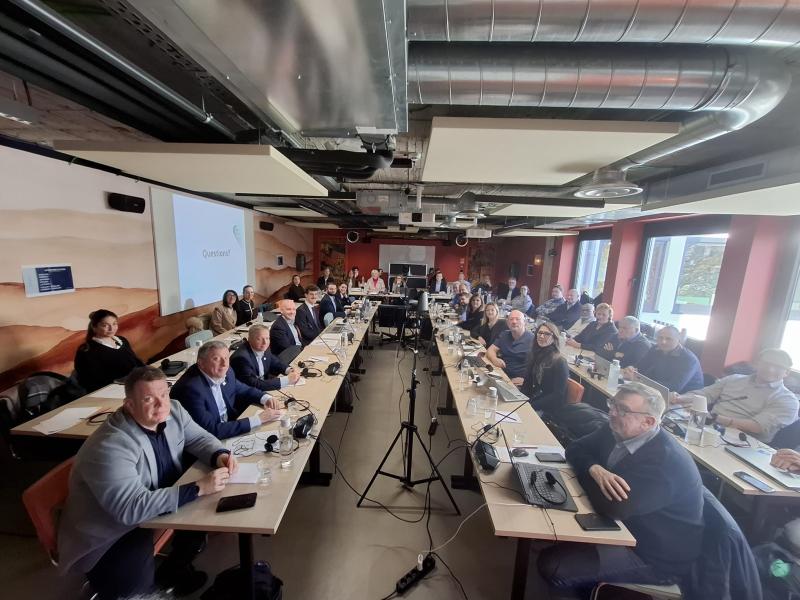
BRUSSELS, 22 April 2026 — The European Transport Workers’ Federation (ETF) today held a high-level conference in Brussels, “Keeping Rail Freight on Track: Workers’ Solutions for a Sector in Crisis”, formally launching the #SaveRailFreight campaign and presenting a new study on the strategic importance of Single Wagon Load (SWL) transport in Europe.
Hosted at the Residence Palace, the conference brought together Andreas Schieder (European Parliament TRAN Committee), Pierfrancesco Maran (ENVI Committee), Pierpaolo Settembri, representing the Commissioner Tzitzikostas, and workers from across Europe reporting on conditions in the sector. The afternoon featured a study presentation by SCI Verkehr on the importance of single-wagon load transport for the european industry, followed by a forward-looking discussion on the way ahead.
The rail freight sector has a paramount role to play in the EU mobility framework, but after years of restructuring and liberalization, it is a sector in crisis. Rail freight is a sector in crisis, and the race to the bottom regarding job stability, pay and working conditions has led to a problematic staff shortage in the sector, with no solution in sight. But the consequences of inaction stretch further: supply chain fragility, growing pollution, and a widening gap between Europe’s climate commitments and its transport reality.
The ETF is calling for a fundamental reorientation of EU rail policy away from a decade-long focus on liberalisation and market competition that has not delivered and towards a model grounded in public interest, industrial resilience and long-term sustainability.
Concretely, this means public funding for freight infrastructure across all segments. It means an overall rail freight strategy that includes SWL operations, feeder lines and rail sidings, so that the sector can contribute to economic and social cohesion across Europe’s regions. It means enabling and encouraging cross-border cooperation between companies. And it means rapid progress towards fair and equal conditions across transport modes, including the full internalisation of social and environmental costs and the application of the polluter pays principle.
The ETF also insists that growth in rail freight must go hand in hand with strong commitments on workers’ rights: high health and safety standards, recognised qualifications, guaranteed access to basic facilities, and tamper-proof monitoring of driving, working and rest times for all mobile staff.
Livia Spera, ETF General Secretary, closed the event with a direct call to EU policymakers:
“The rail freight sector is constantly providing essential services to the European economy but it is not treated as the priority it is. Today we launch a campaign to call for a fundamental shift in railway policy to respond to a sector that is in crisis. Rail freight should be considered as a public service and funded accordingly. ETF calls for a fundamental reorientation of European rail policy, moving away from a dogmatic belief in market competition and towards a model that prioritises public interest, sustainability, and industrial resilience.”