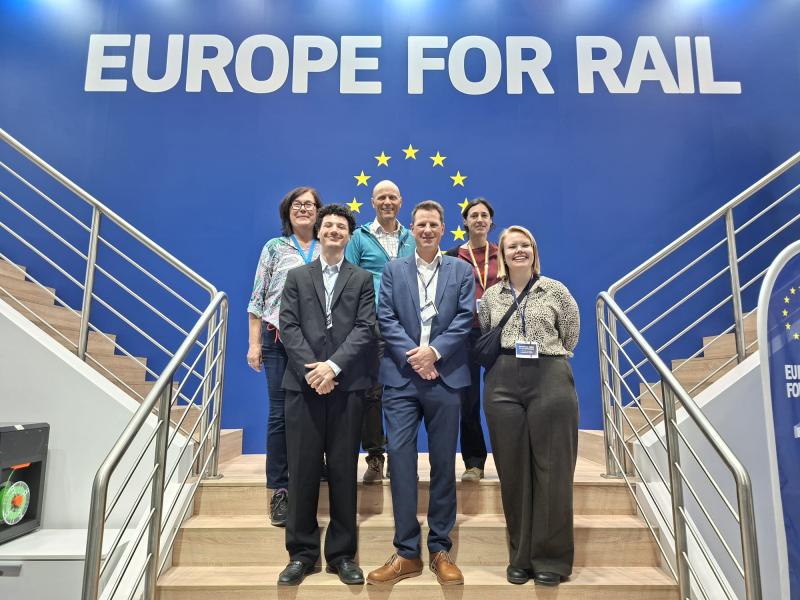
Meeting in Tbilisi, Georgia, the ETF Railways Section unanimously adopted a statement calling for urgent and decisive action to address the crisis in European rail freight. The meeting, held on 27 May 2026, brought together railway workers’ representatives from across Europe, a sign that the challenges facing rail freight extend well beyond the European Union’s borders.
The statement comes at a critical moment. Next week, on 8 June, EU Transport Ministers will gather for a Transport Council meeting and rail freight is expected to be in focus. ETF is calling on Ministers to match the commitment the sector urgently needs, and warns that any initiative falling short of a comprehensive response risks deepening a crisis that has been decades in the making.
The Railways Section identifies the root causes of the decline as chronic underinvestment, insufficient public support and the damaging effects of liberalisation and come up with seven measures for turning the tide: recognising rail freight as a public service, securing long-term public investment, protecting the single-wagon-load system, fostering cooperation between operators, improving working conditions, creating a level playing field across transport modes, and ensuring job security for workers throughout any restructuring process.
ETF also raises concerns about the framing of current EU-level discussions. Workers and their job security must be central to any policy response, not an afterthought.
Railway workers are essential to the functioning of the rail freight system. Yet, over the years competitive pressures have contributed to a gradual deterioration of job safety and working conditions, fuelling labour shortages and making recruitment increasingly difficult. The statement calls for equal pay for equal work, guaranteed access to decent facilities, standardised training, and strict monitoring of working and rest times.
This is the last chance to revive rail freight across Europe, to make it an attractive sector for young job seekers, to give it the right share in the modal mix, and make it a real contributor to the decarbonisation of transport.