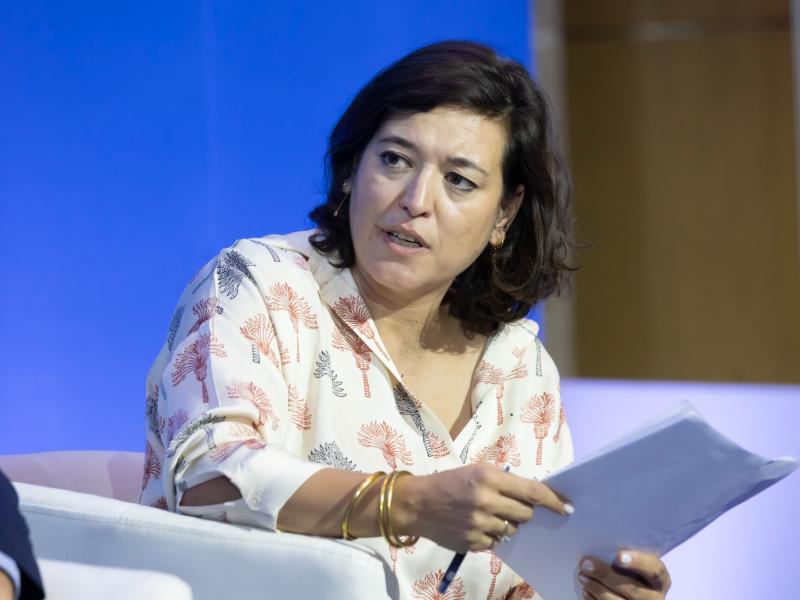
Taking place in the largest logistics centre in Italy, in Piacenza – the Logistics and Maritime BiLOG 2022 Forum – was the perfect opportunity for the ETF General Secretary, Livia Spera to present our vision on how to build a safe future in logistics, a priority sector for ETF.
Ports and logistics hubs have very much in common, and ETF is currently exploring ways in which the two sectors can learn from each other, also regarding labour.
Due to the substantial similarities between the two sectors, Livia Spera explained logistics could fully benefit from the gains port workers have achieved over time. Conditions for port workers have greatly improved, underlined the ETF General Secretary:
‘From highly precarious work due to the unpredictability of the arrival of ships, nowadays we have stable jobs and legal tools to oblige ports to make work more predictable and remedy exploitation. Even labour pools emerged in some areas, despite resistance and a dogmatic obsession with competition.’
Unfortunately, reality shows logistics has developed in a poorly regulated context. Major companies hold power, while profitability is achieved by passing the risks on to workers – employment is subcontracted, temporary and precarious. As Livia Spera explained, genuine collaboration with trade unions is the only way to guarantee stable jobs while ensuring the flexibility required by the sector and a stable supply of workers. According to her, dock labour pools are good employment models to be replicated in logistics.
At the same time, she highlighted that moving in the right direction in logistics also implies working closely with local institutions, as Italy is already doing:
‘Examples of state governance in ports have successfully enabled flexibility, continuity of work, guaranteed training, and the availability of manpower. Thus, solid governance and regulation in logistics are vital, with a leading role for trade unions, as a precondition for ensuring healthy and safe jobs for logistics workers.’
Finally, she stressed that advances in digitalization must go hand in hand with training, professionalization, and safety and that both ports and logistics hubs address the gender balance by offering attractive roles for women – through flexible shift patterns, access to facilities and better safety.