ETF black logo ETF black logo ETF black logo ETF black logo

Google Translate

Interview with Nick Bramley on ETF 2013 Congress

News

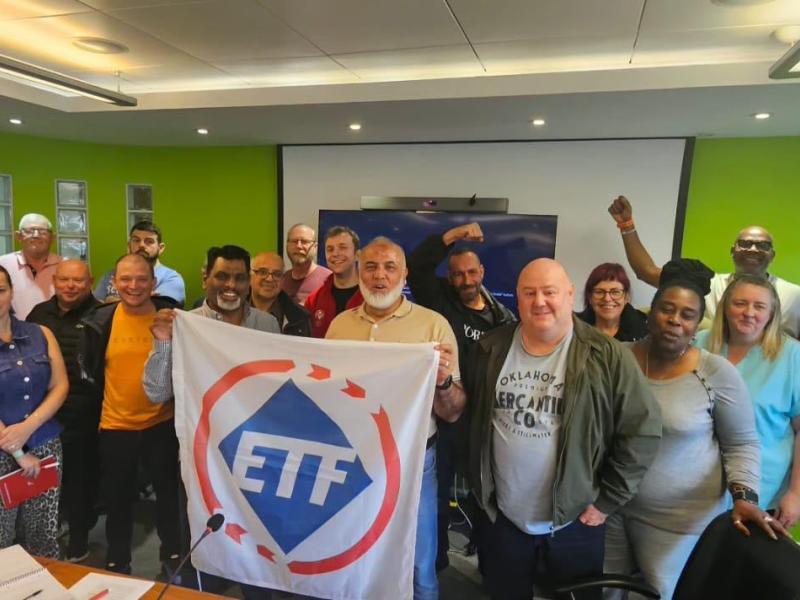
Nick Bramley (Nautilus International), President of the ETF Inland Waterways Section was interviewed today by Myriam Chaffart, ETF Political Secretary, about his impressions on the first ETF 2013 Congress day.

What will you remember of the first Congress day?

The youth presentation was good. We have always known that young workers are at congress, but they never appeared as a tangible block like yesterday. Paddy Crumlin’s speech was also outstanding. It was rhetorically very good, very emotional, the ITF President is a natural speaker. And Bob Crow’s speech was strong because he clearly said to ETUC General Secretary Bernadette Ségol that the ETUC’s views are wrong.

I also appreciate the facilities in this hotel. The meeting room is good, the acoustic, the organisation around it. Of all past ETF congresses, this is without a doubt the best congress room. The hotel is also big so we are all at the same place and you can keep meeting people. Except for the IT and translation breakdown, but it gave us a good laugh.

Which part of the Congress Main Motion is in your opinion the most important? 

Our main priority is organising. Getting membership, getting people active, moving the agenda away from being just a piece of paper. It’s not only the ETF secretariat who has to do this, but all of us, make unions more active, more present more noticeable.

What is the next challenge for your sector? 

Tomorrow our Section will submit an emergency resolution on the blockade in social dialogue. Currently we have a lot of work on certification and training. It aims to make the profession more attractive for younger people. And building up membership also stays an important challenge, we have problems with recruiting and we need presence aside of the rivers and the canal.

ON THE GROUND

News

Keeping a warming Europe moving: how hot temperatures affect transport workers and what can be done about it

As part of the European continent undergoes its fourth heatwave of 2026, it has become abundantly clear that occupational heat exposure is no longer an exceptional or occasional summer hazard. It is an emergent occupational hazard only destined to escalate. Europe is the second fastest-warming region of the globe after the Arctic. According to EU-OSHA 2025 numbers, one in five workers in the EU signaled exposure to extreme heat at work in the previous 12 months, a figure rising to one in three in some countries.
News

Unruly passengers: more than just summer headlines

Summer may be synonymous with relaxation for holidaymakers and every summer seems to produce its share of eye-catching headlines. Just days ago, The Guardian reported on a drunk British holidaymaker who tried to kiss a flight attendant on a plane and was arrested on his way back through Palma airport. A week earlier, headlines were dominated by reports of a flight from Dublin to Ibiza descending into what was described as "sex and booze chaos," leaving fellow passengers shocked.
News

UK public transport unions sound the alarm over lack of toilet access for drivers

Public transport unions in the United Kingdom are raising urgent concerns about the lack of access to toilet facilities for bus and train drivers, a problem that has persisted for years but is now reaching a breaking point. Reports from across the UK show drivers being forced to work entire shifts without guaranteed access to a toilet, leaving them to rely on improvised or unsafe alternatives, including urinating in bottles in their driving cab. Some unions are now considering industrial action to force employers and authorities to act.