

ETF black logo ETF black logo ETF black logo ETF black logo

Google Translate

ITF welcomes AF447 verdict: justice for crews and families

News
The International Transport Workers' Federation (ITF) welcomes yesterday's ruling by the Paris Appeals Court finding Airbus and Air France guilty of corporate manslaughter over the 2009 crash of Flight AF447.

We stand in full solidarity with our French affiliates and the families of the 228 victims who have fought for justice for 17 years. This verdict matters: it makes clear that responsibility for this disaster lay with the companies - not the crew.

"For years, Airbus and Air France sought to place blame on the flight crew," said Bilal Malkawi, ITF Director of Civil Aviation and Tourism.

The evidence showed both companies were aware of problems with the aircraft's speed sensors months before the crash and failed to act. Crews were not given the training or information they needed. That is a management failure, not a crew failure."

The decision by both companies to appeal once again is deeply disappointing. The ITF echo the call of victims' families to stop prolonging this ordeal.
 

Photo credit: Reuters
ON THE GROUND

News

ETF unions meet in Brussels for the aviation week

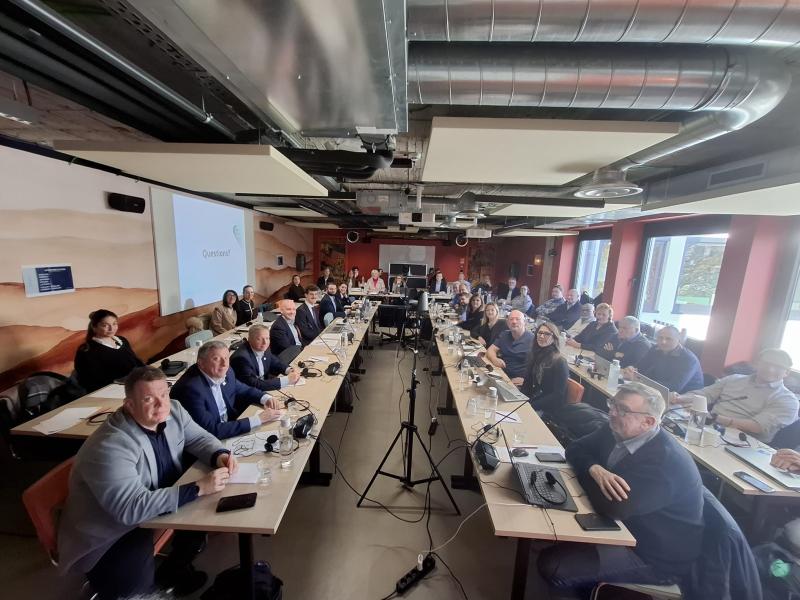
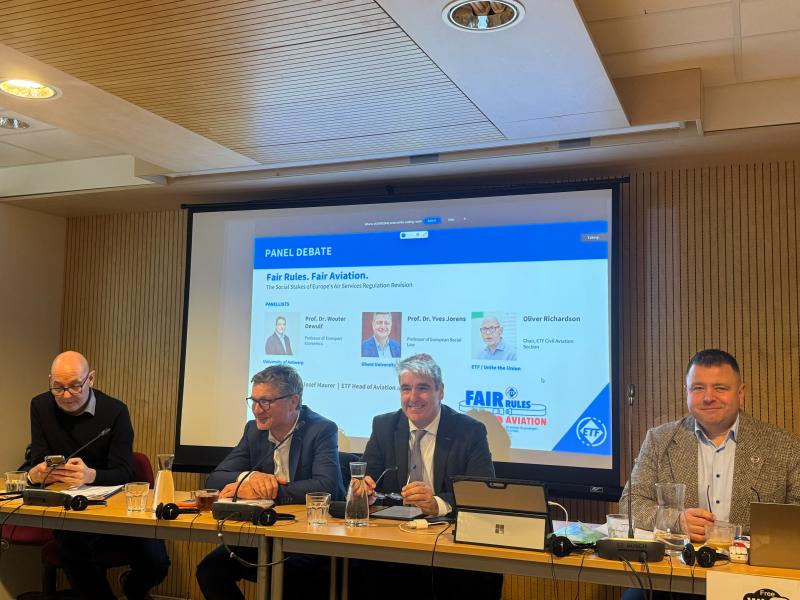
From 2 to 5 November 2026, aviation trade union representatives from across Europe gathered in Brussels for the governance meetings of the ETF Civil Aviation Section. We kicked off the week with the Steering Committee, followed by meetings of the Joint Aircrew (JAC), Air Traffic Management (ATMC) and Ground Staff (GSC) Committees. We continued with the Civil Aviation Section meeting on Wednesday, focusing on horizontal priorities affecting workers across the aviation sector, and concluded the week on Thursday with the annual plenary of the European Sectoral Social Dialogue Committee for Civil Aviation.
News

European Social Dialogue in Urban Public Transport Reaches New Milestone

Urban Public Transport (UPT) is a critical sector for Europe, employing more than 2 million people and providing a vital and fundamental public service. Without UPT, European cities would grind to a halt and hundreds of millions of Europeans would not be able to effectively reach work, education and leisure. However, for historical reasons this essential sector has not enjoyed the full rights within the structures of European Social Dialogue, being merely a working group under the Road Sectoral Social Dialogue Committee. This is despite the fact that UPT faces massive challenges and changes, from the labour shortage to underfunding to the need to decarbonise vehicle fleets, alongside many others.