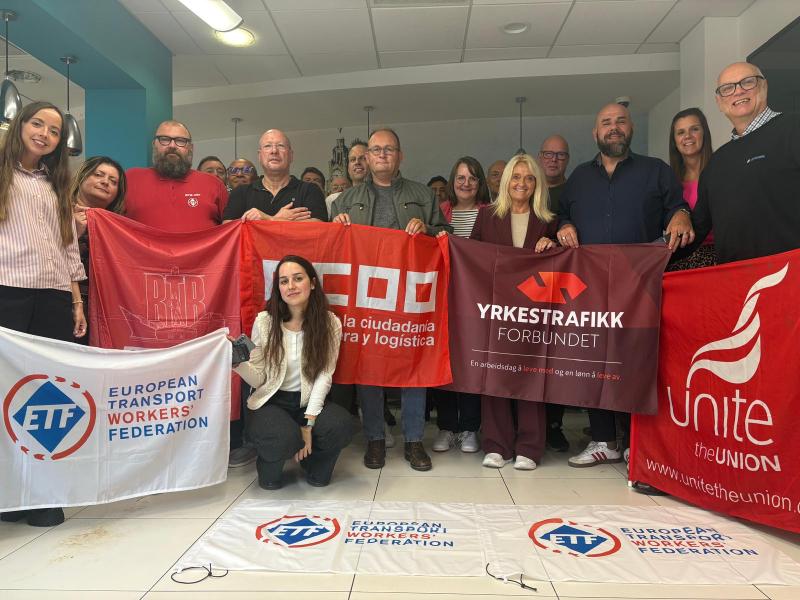
The European Transport Workers’ Federation (ETF), Europêche, and Copa-Cogeca have issued a joint position paper calling on the European Commission, the European Parliament, and the Council to support the integration of the revised International Maritime Organization (IMO) STCW-F Convention into European Union law through a dedicated EU directive.
The International Convention on Standards of Training, Certification and Watchkeeping for Fishing Vessel Personnel (STCW-F), which entered into force in its revised form on 1 January 2026, establishes an essential, internationally recognized framework for the training, certification, and competence of fishing vessel personnel.
While standards for merchant shipping seafarers have long been fully integrated into the EU regulatory framework, fishing vessel personnel have not yet received equivalent treatment. Implementing the STCW-F through an EU directive represents a critical opportunity to elevate safety in a profession that involves unique operational challenges and inherent risks, and guarantee that fishers are granted the same level of professional recognition, training and protection as other maritime workers.
Core recommendations for policy action
The joint position paper outlines seven key actions for EU policymakers:
- Adopt an EU directive: develop a legislative framework implementing the revised STCW-F Convention.
- Enable mutual recognition: establish an EU-wide framework to facilitate the mutual recognition of certificates of competency and training certificates, including safety training certificates, removing current barriers to labor mobility within the internal market.
- Leverage EMSA expertise: mandate the European Maritime Safety Agency (EMSA) to monitor compliance, reducing duplication of efforts and administrative burdens for Member States in the same way and within the same infrastructure as EMSA does in relation to the STCW Convention.
- Integrate systems: embed STCW-F requirements within existing STCW-based education, certification, and quality assurance structures.
- Standardize safety training: use STCW-F Chapter III as the common European baseline for basic safety training across the entire fleet.
- Promote professional mobility: harmonize competence frameworks to enhance skills and mobility between Member States and across maritime sectors.
- Increase safety on-board fishing vessels: ensure all fishers receive internationally recognized training to significantly mitigate the frequency of accidents.
- Improve skills and attractiveness: improving the profile and attractiveness of the fishers’ professions by elevating safety training, harmonization of certification and mobility.
A balanced framework for a sustainable sector
The revised convention applies to all fishing vessel personnel, providing a baseline of safety that is highly relevant to the small-scale and coastal vessels making up the majority of the EU fleet. Crucially, the framework respects proportionality by allowing Member States to apply flexible, local measures for smaller vessels under 24 meters without imposing disproportionate burdens on small fishing enterprises.
Furthermore, by embedding modern environmental competencies—such as pollution prevention and waste management—into professional training, the directive would turn the sustainability goals of the Common Fisheries Policy (CFP) into daily, operational practices on board.
“Establishing a harmonized European baseline for safety training is not just about regulatory alignment; it is about protecting human lives at sea and professionalizing our industry,” stated Cor Blonk, Chair of the EU Sectoral Social Dialogue Committee for Sea Fisheries. “An EU Directive would eliminate the resource-intensive duplication where Member States must individually evaluate each other’s certification systems. By creating clear, recognized career pathways and raising safety standards, we can enhance the attractiveness of the fishing sector for the younger generation and effectively address critical labor shortages.”