With upcoming environmental legislation and new powertrain technologies, European road transport is at a crossroads. Jobs and working conditions are and will be impacted by new green transition-related regulations. Yet, road transport workers call for a Just Transition.
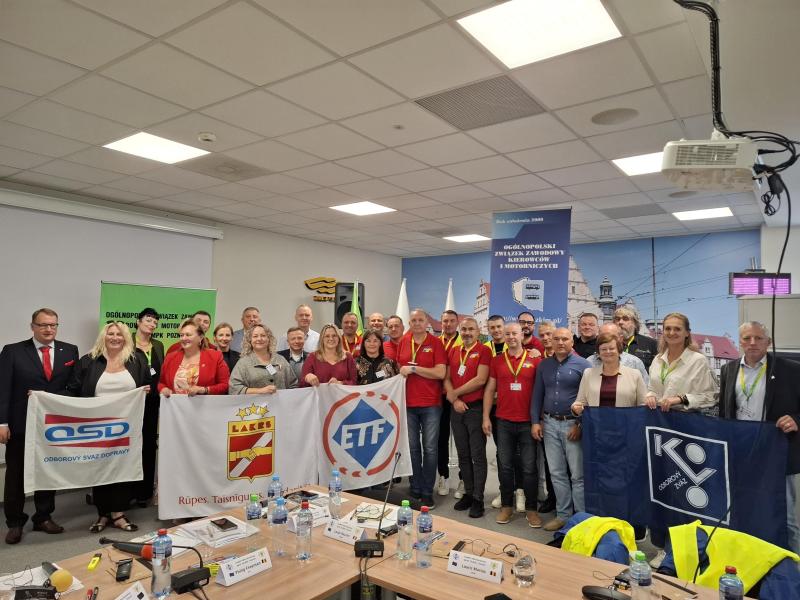
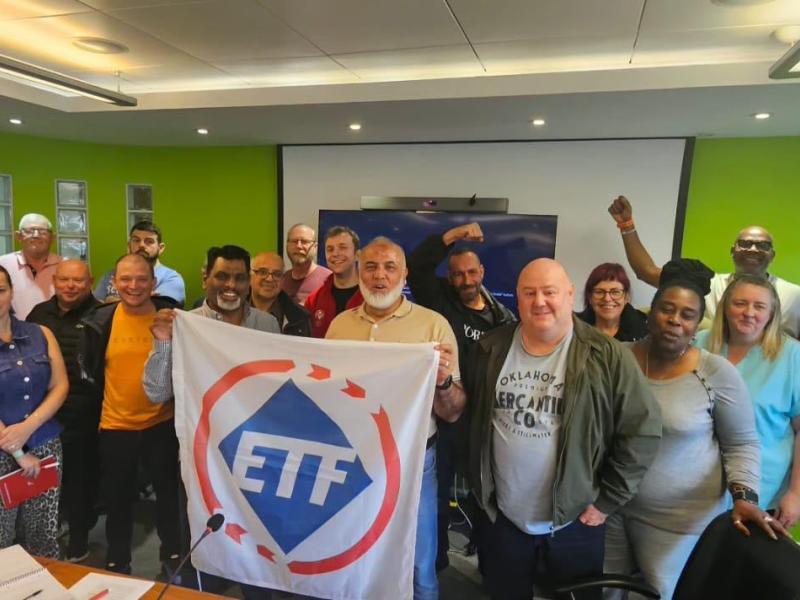
As part of a joint EU-funded project, ‘Building a Just Transition towards a Smart and Sustainable Mobility’ (JT4Mobility), on 27 April 2023, industriAll Europe and the European Transport Workers’ Federation (ETF) organised a workshop on the road transport sector – with a focus on heavy-duty vehicles.
The workshop addressed the technical and social challenges of the green transition on workers in road transport industries and operations. The year-long project aims to support a better understanding of Just Transition between manufacturing and transport service workers and also includes external expertise from companies, industry and employers’ associations and public institutions.
Various technology options could be used to decarbonise trucks and buses. While battery electric vehicles and hydrogen (fuel cells and hydrogen in internal combustion engines) are technologies that are the most often identified to allow the sector to reach climate neutrality, there is no “one size fits all” solution. Renewable fuels, as an alternative to fossil fuels, could also have a role to play, particularly in transport activities that are hard to electrify.
Negotiated plans to accompany change in a socially fair way, including re-skilling and up-skilling activities, are required to achieve a Just Transition. It will also be essential to identify risks specific to new technologies, such as batteries and hydrogen, and to prepare workers to cope with them while adapting occupational health and safety legislation when necessary.
The manufacturing industry representatives at the workshop insisted on the need to ensure that the enabling environment will be there on time to reach the emissions reduction targets, notably in terms of charging infrastructure rollout. The transport industry experts stressed the importance of technology neutrality to access a portfolio of solutions that fit with the variety of contexts that HDV must operate in. Both industries agreed on the need to also create lead markets with appropriate support measures, allowing customers to purchase clean vehicles.
A coherent and comprehensive EU strategy covering all the dimensions of the already ongoing transformation is vital: manufacturing, including supply of raw materials and energy, infrastructures, coherent transport policy measures, and workforce. Contractors’ low-cost strategies are detrimental to drivers’ working conditions, and investment in infrastructures should not only aim to allow technology uptake but also improve working conditions.
Europe faces a systematic shortage of drivers – due to low pay and poor/very difficult working conditions in the road transport sector. The only answer to the current crisis is to transform the road transport sector to one in which workers have access to decent and fairly paid jobs protected by fair rules. And it is also essential that those rules are enforced!
IndustriAll Europe and the ETF both stress the need to:
- implement a coherent and comprehensive strategy to decarbonise road transport in a way that will keep and create quality jobs in Europe;
- anticipate and manage the decarbonisation of the sector in a negotiated way, notably to provide adequate training and upskilling programmes;
- make companies more responsible when it comes to investment, the anticipation of change and working conditions across the sector and the related value chains.
-