

Last week, the ETF’s civil aviation section held meetings in Malta to discuss the country’s growing strategic role in European aviation governance. Discussions in Valletta and Lija focused on the economic, safety and social dimensions of aviation oversight, as Malta has become an important hub for Air Operator Certificate (AOC) issuance.
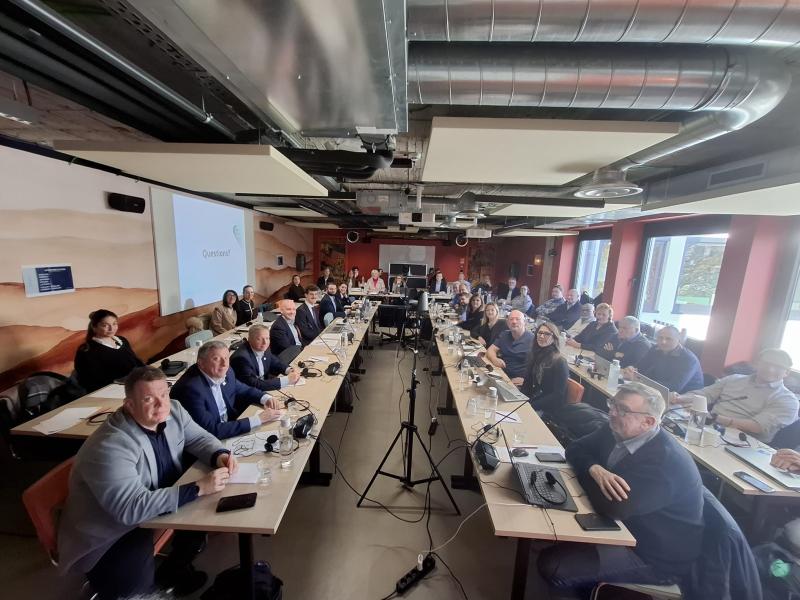
We started the week with the annual strategic meeting of our steering committee focusing on the new EASA Ground Handling Regulation, the future of Sectoral Social Dialogue in Aviation, organising priorities and the roadmap towards the next ETF Congress.
On the second day, our Joint Aircrew Committee exchanged views with GWU General Secretary Joseph Bugeja on Malta’s role as an aviation hub and key EU files, including the revision of the Air Services Regulation, firmly opposing any relaxation of Ownership & Control rules, as well as Air Passenger Rights, the EU–Qatar Agreement and recent EASA developments. We also congratulate Michele Longano (FILT-CGIL, Italy) on his election as new JAC Vice Chair representing pilots.
At the same time, our ATM delegation met the Malta Air Traffic Controllers Association to discuss performance targets, understaffing and fatigue, while being made aware of the particular situation at a local level.
Exchanges with Maltese authorities and social partners
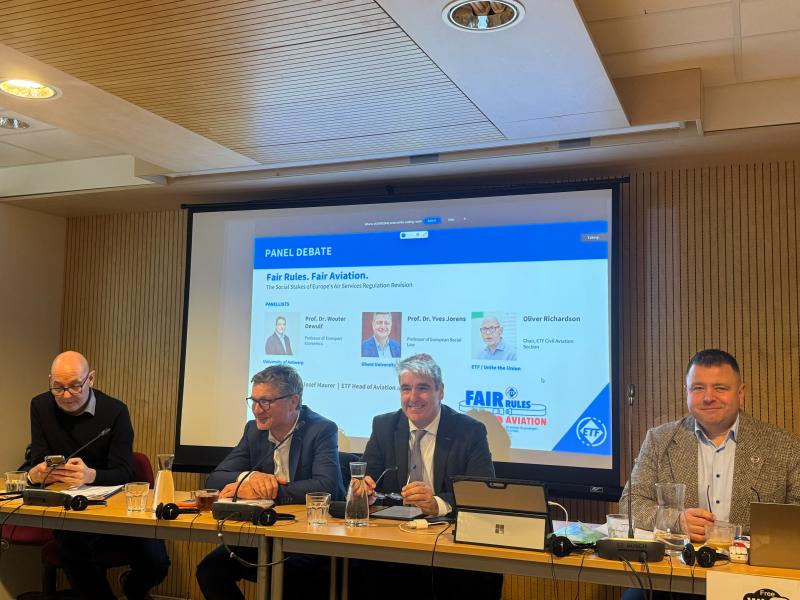
On Thursday, our Stakeholder Day started with bilateral meetings with Maltese government representatives, including the Finance Minister, Transport Malta and its Civil Aviation Directorate. The authorities underlined the economic benefits of aviation for the country, highlighting the efficiency and competitiveness of Malta’s registry. According to their statements, safety oversight obligations are fulfilled in line with European Union Aviation Safety Agency (EASA) requirements, while maintaining that employment and social matters fall primarily under the jurisdiction of the country where workers are based. As ETF, we contested this oversimplified interpretation and pointed out the grey zones that affect our members among aircrew. We then continued our exchange with the representatives of Maltese pilots’ and cabin crew union who largely share our analysis of the situation.
Bridging oversight gaps: aligning safety, social standards and regulatory responsibility
While we welcomed the open exchange, we also raised concerns about the growing complexity of corporate airline structures involving several EU Member States and possible gaps in oversight and enforcement. However, safety oversight and employment conditions cannot be fully separated in practice. Flight time limitations, working time rules, fatigue management and reporting are structurally interconnected. Evidence from research on atypical employment in European aviation confirms that precarious contractual arrangements can negatively affect reporting behaviour, crew wellbeing and, ultimately, safety.
We therefore call for clearer allocation of responsibilities and stronger coordination between authorities to avoid regulatory grey zones that risk undermining both safety, social aspects and fair competition. The ETF and our affiliates will continue engaging with Maltese authorities and EU institutions to promote legal certainty, strong social protection and high safety standards across European aviation.