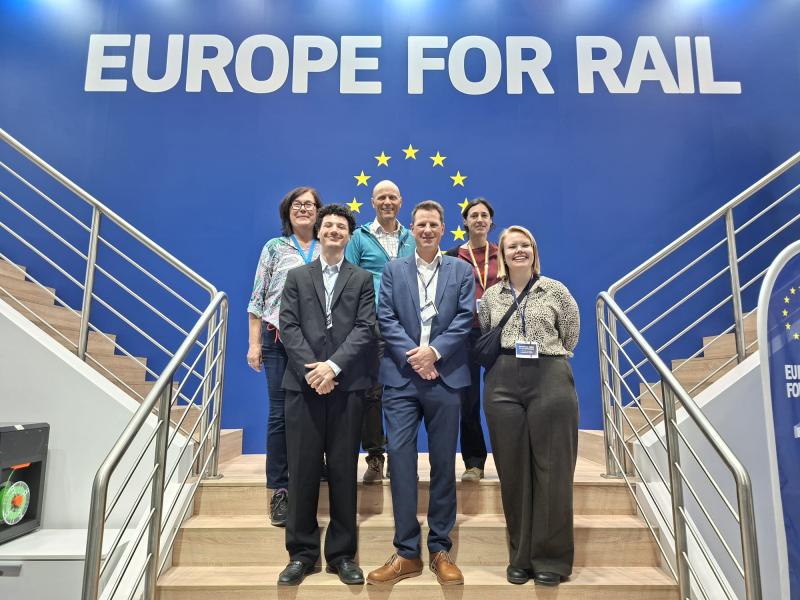


The third regional workshop of the TU4BPT project took place on 2 and 3 June, gathering trade union representatives from the public transport sector to deepen their understanding of, and readiness for, the twin transitions currently transforming the industry: the green transition and the digital transition.
Public transport is at the heart of Europe’s decarbonisation agenda, and digitalisation is rapidly changing how services are planned, managed, and delivered. The workshop provided a structured space for union representatives to engage with these shifts in depth, exploring what they mean for workers, for collective bargaining, and for the future of the sector.
Participants exchanged experiences, identified shared challenges, and continued building the tools and knowledge base that the project is developing to support unions in navigating this rapidly changing landscape.
Extended Discussion with UPT Affiliates: 4 June
On 4 June, the workshop was followed by an extended discussion bringing together affiliates of the Union of Public Transport (UPT) from across Europe. This broader conversation focused on two of the most critical and cross-cutting themes of the TU4BPT project.
Automation in Public Transport
Automation, from automated ticketing and passenger information systems to driverless vehicles and AI-driven operations, is one of the most significant forces reshaping public transport work.
The discussion explored what automation means in practice for transport workers. Participants shared experiences from their national contexts and discussed how unions can engage proactively with employers, operators, and policymakers on this issue.
The Critical Need for Adequate Funding
No discussion of public transport’s future can be complete without addressing the question of funding.
Adequate, stable, and long-term public investment is a prerequisite for a public transport system that is both sustainable and fair.
Unions have a vital role in making this case to governments and institutions, and the Berlin discussion explored strategies for doing so effectively.
About TU4BPT
The Trade Unions for Better Public Transport (TU4BPT) project aims to strengthen the capacity of public transport trade unions to engage with and shape the green and digital transitions in the sector, ensuring that workers’ voices are central to decisions that will define the future of public transport in Europe.
The TU4BPT project is co-funded by the European Union.