



This week, six trade union organisations from Belgium, Denmark, Romania and Sweden will open a Joint Trade Union Cooperation Office, under the coordination of the European Transport Workers’ Federation.
3F Denmark, ABBV-BTB and CSC Transcom from Belgium, the Swedish Transport Workers’ Union, the ATU Romania and the Sindicatul Liber al Transportatorilor (SLT) have pulled resources to assist unionised truckers, whenever they are confronted with problems during their work abroad or in their relations with their employer.
The opening will take place in the capital city of Romania, Bucharest, on the 10th October. The Bucharest unit will be dealing contacts with social partners and national institutions. This will be followed on the 13th October by the inauguration of the operational base in Targu Mures, central to the region that sees thousands of Romanian drivers leaving the country to work abroad.
Crossing Europe as part of the job, lorry drivers experience health problems, get orders from their employers often conflicting with the law, spend months living and working in their trucks and are subject to tough controls and sanctions. Not speaking languages and having no one to relate to makes it hard to deal with situations that affect their jobs and wellbeing. Via this cooperation, when in Belgium, Denmark or Sweden, and when unionised, our professional drivers will be able to ask for union help and assistance on the spot.
The Joint Trade Union Cooperation office will also help truckers make better use of their rights and entitlements relating to social security, to have better access to health care when need be, in a context where most of them have an employment situation that involves at least two countries and thus find it difficult to work out where to claim these rights.
This initiative is part and parcel of the ETF ongoing Fair Transport Campaign and aims to end modern slavery in modern Europe, in road transport.
For more information please contact Cristina Tilling via email at c.tilling@etf-europe.org or via Mobile at +32(0)478 55 81 35.
Follow us too on Facebook www.facebook.com/ETFRoadSection/ and Twitter @ETF_Road
Trade union organisations get together to defend the rights of truck drivers in Europe and address social dumping and modern slavery in road transport
Press release
ON THE GROUND

Press release
Europêche, ETF, EFFAT and Copa-Cogeca call for an urgent revision of the Common Fisheries Policy
The four organisations urge the European Commission to include concrete legislative action in its Vision for Fisheries and Aquaculture 2040 and its 2027 Work Programme
News
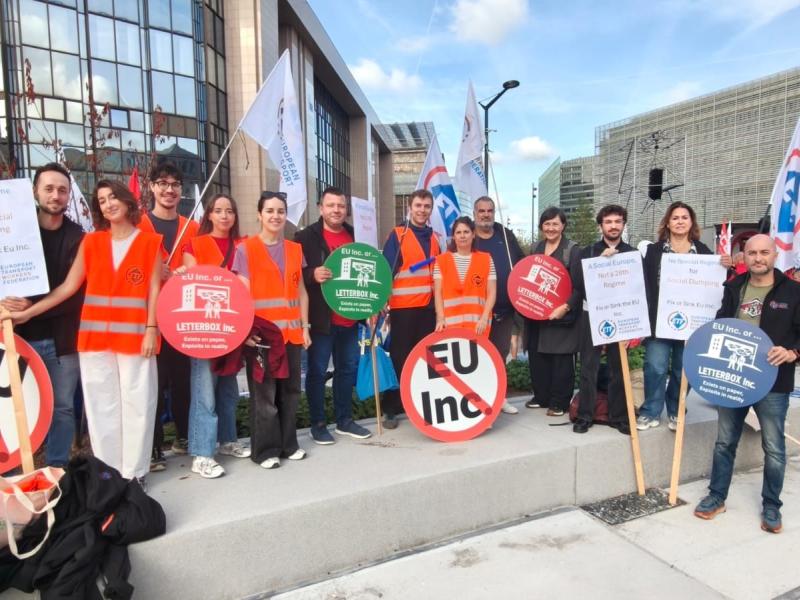
EU Inc – A new 28th regime for social dumping?
As negotiations continue in the European Parliament on EU Inc., the proposed new European company regime, the European Transport Workers' Federation (ETF) is heavily concerned that this proposal could come at the expense of workers' rights and social dialogue. The initiative aims to make it easier for companies to operate across borders, but this must not weaken the social protections that are fundamental to the European model.
News
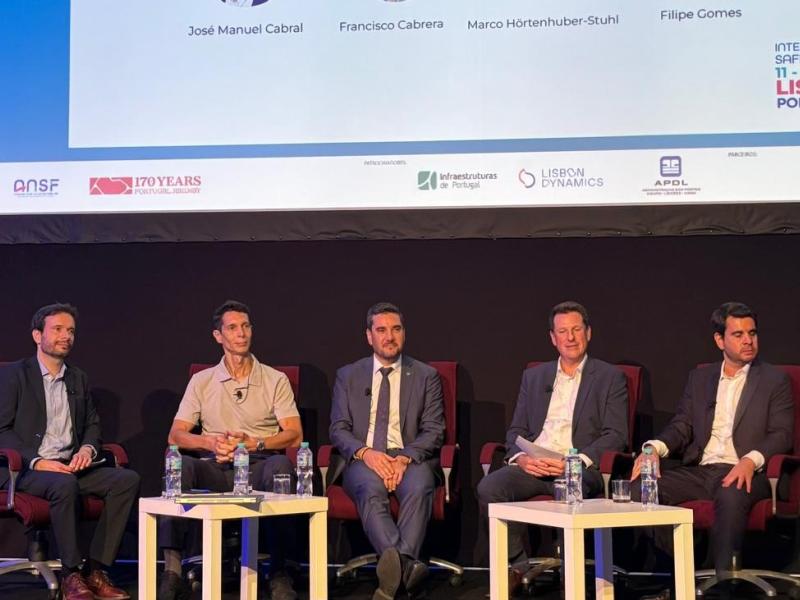
IRSC 2026: ETF Calls for Working Time Monitoring as a Railway Safety Tool
At the International Railway Safety Conference (IRSC) 2026 in Lisbon, ETF Technical Coordinator and locomotive driver Marco Hörtenhuber-Stuhl presented the European Transport Workers' Federation's vision for monitoring working, driving and rest time as a core railway safety tool. His presentation,"Monitoring Working Time as a Railway Safety Tool: From Compliance to Proactive Risk Management", argued that effective monitoring is not merely an administrative or labour-law requirement, but an essential component of modern railway safety management.