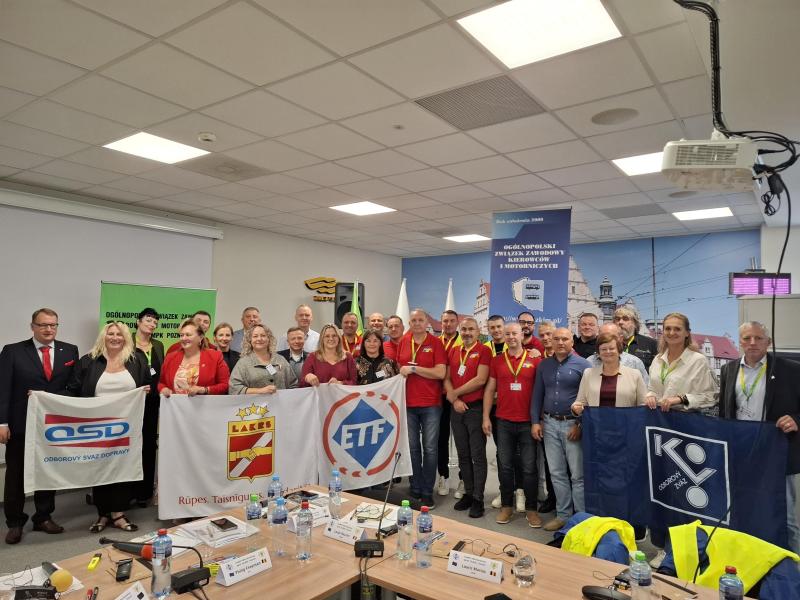
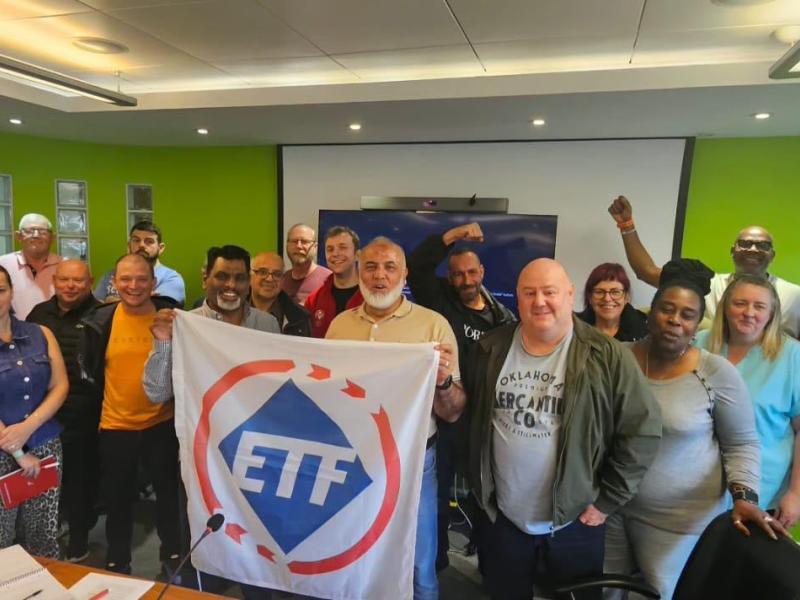
The transport sector is the backbone of the European economy, facilitating the movement of goods, services, and people across the continent. But the industry has undergone significant transformations in recent years due to technological advancements, globalisation, and shifting market dynamics.
Amid these changes, trade unions play a vital role in representing workers’ rights and interests. They are the ones fighting against precarious employment, such as zero-hours contracts or outsourcing, which can undermine workers’ rights and job security. They are the credible voices demanding social protection for workers: unemployment benefits, pensions, or access to healthcare.
Our aviation workers from different European countries have increased salaries to cover the inflation rates thanks to the trade unions’ continuous work. They also negotiate with employers for fair wages, improved working conditions, and healthy and safe jobs in the sector.
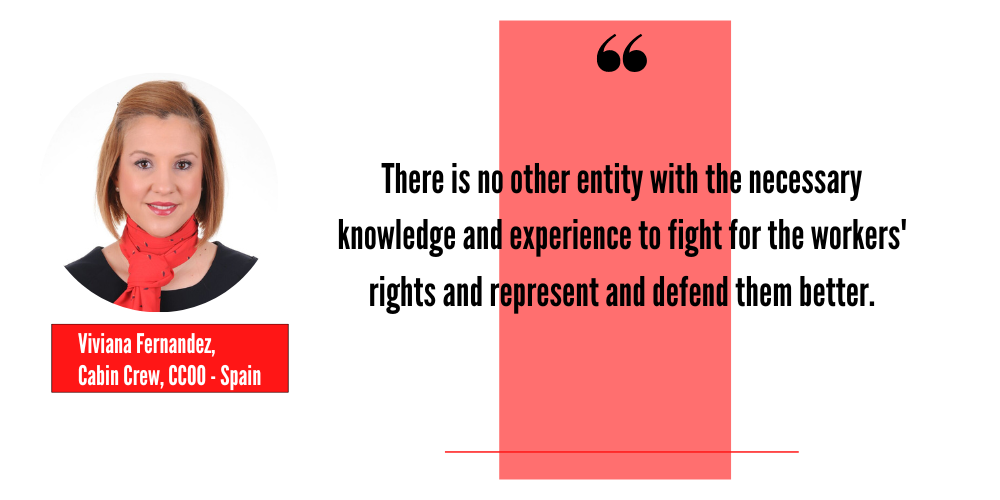
‘A trade union in the aviation sector, particularly one directly involved in the CBA, is crucial,’ believes Viviana Fernandez. She recently joined the aviation industry as a cabin crew in Spain and is a member of our CCOO affiliate. Still, she says she has already learnt one thing for sure:
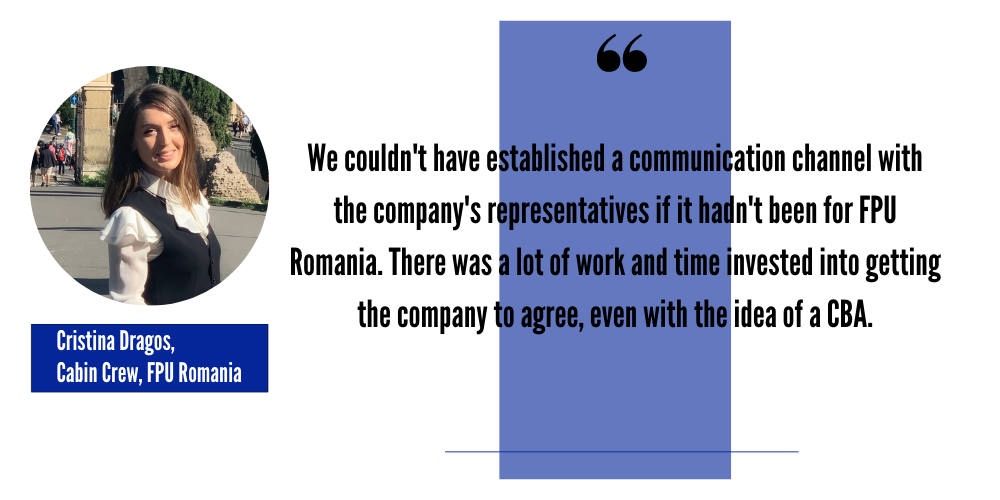
Across Europe, aviation workers are more and more convinced that nothing could have been achieved without trade unions. Cristina Dragos, a Romanian cabin crew confessed:
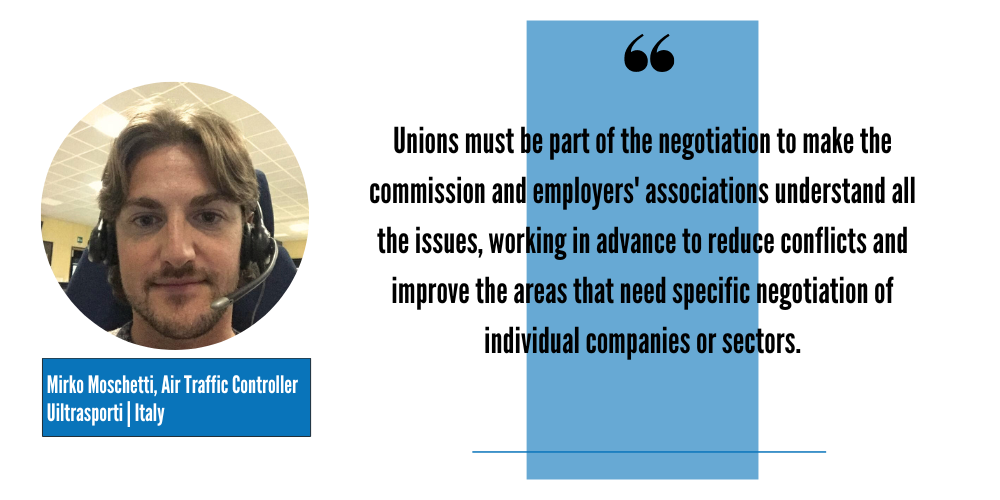
Even for ATM, a relatively stable sector until recently, the role of unions is crucial, says Mirko Moschetti, an Italian air traffic controller and member of Uiltrasporti:
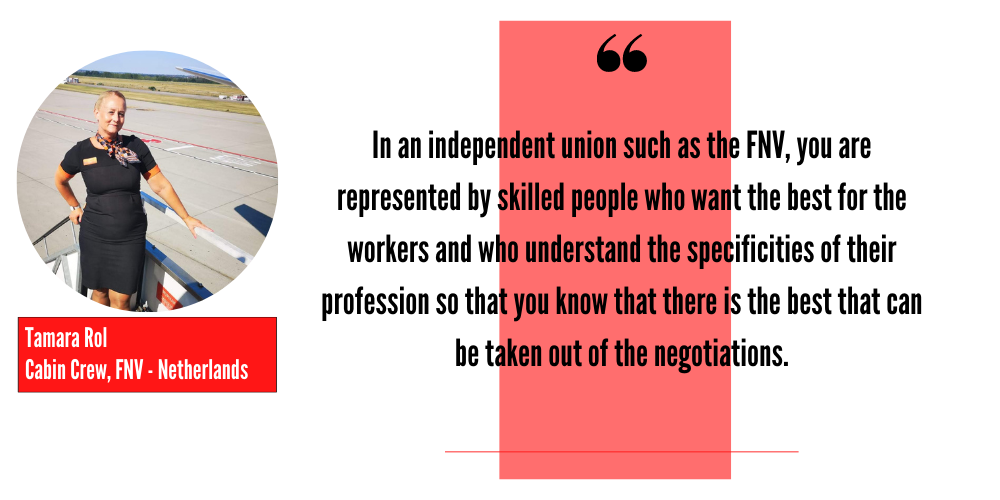
As one of the first members of the FNV union at EasyJet in the Netherlands and a member of the Dutch Work Council, Tamara Rol knows the chances of decent working conditions and fair pay are non-existent unless there is a union to speak on your behalf:
No one can contest unions’ crucial role in negotiating collective bargaining or labour agreements. By bringing workers’ concerns to the table of discussions, trade unions ensure that wages and working conditions are fair and directly reflect other specific employees’ demands.
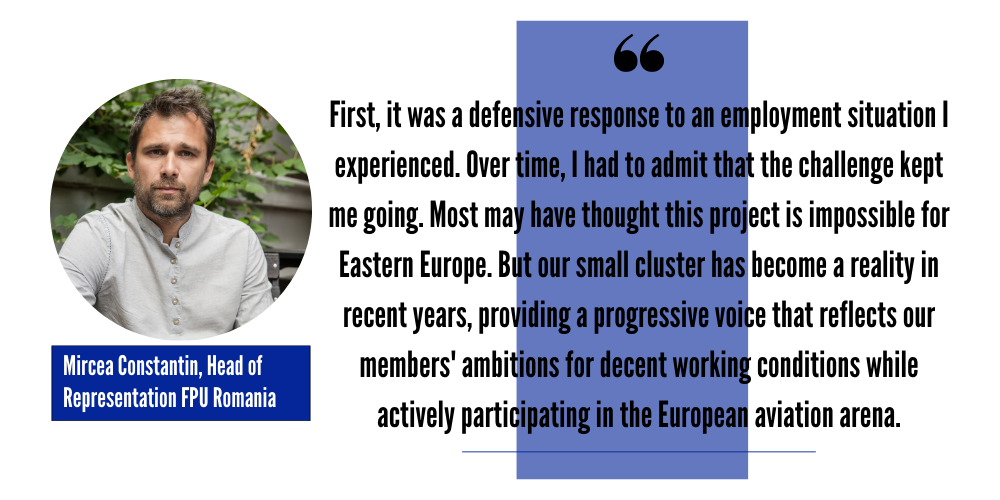
Even in countries where trade union representation is strongly challenged, things seem to start moving in the right direction, as Mircea Constantin, FPU representative in Romania, indicates. After fighting for years to find justice after being illegally fired, he started the foundation of a new union in Romania. A massive amount of work, but no regrets, as he declares:
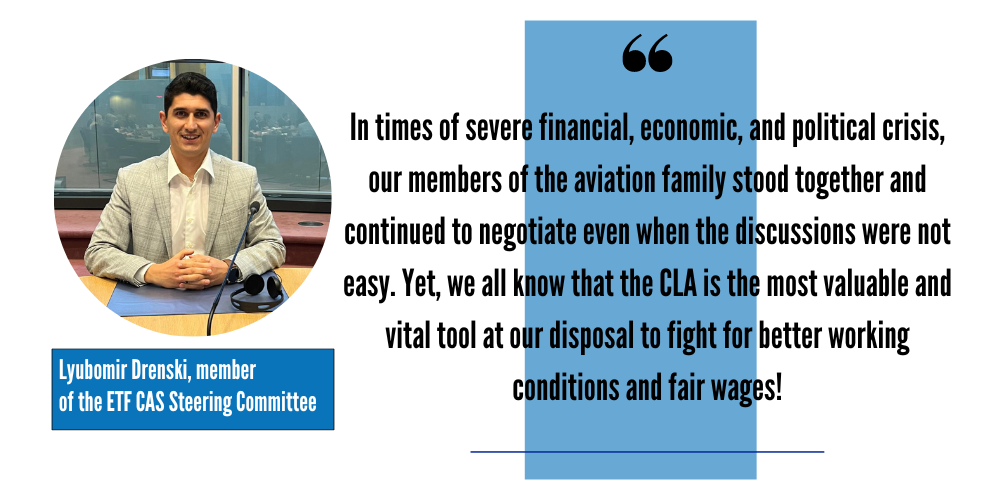
On the other side of the Danube, in Bulgaria, the FTTUB union has recently signed a new CBA at Sofia Airport after complex negotiations. What a victory for them, as the new CBA will bring between 14,5 and 20% pay raise for the different categories of workers, a 12% increase in the night shift allowance and improved working conditions for all airport workers. Lyubomir Drenski, a member of the ETF CAS Steering Committee, says that this was possible due to the solid social dialogue the union built and maintained over the years with the employer:
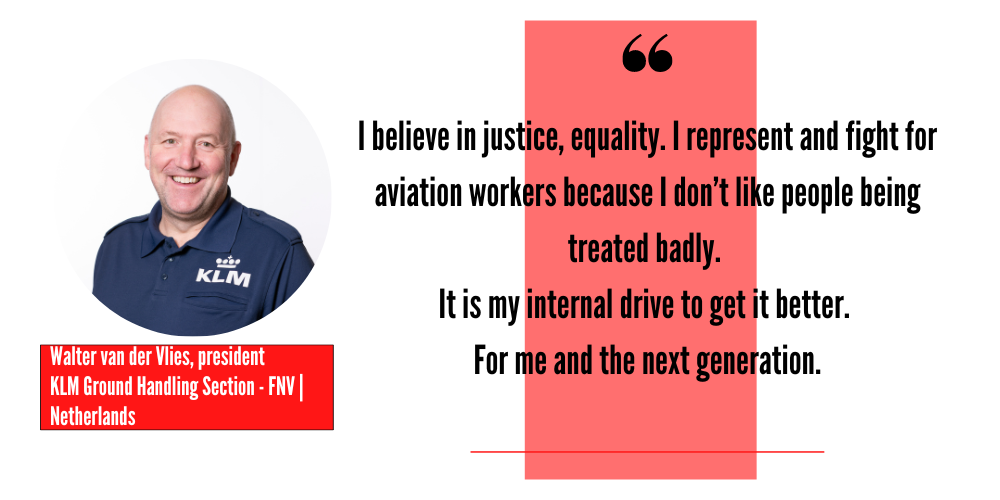
Days, weeks, months, years of continuous hard work. It has been exactly like that for Walter van der Vlies (FNV), a well know figure representing ground-handling workers in CBA negotiations with KLM in the Netherlands. Yet, he prefers to speak about victories rather than how bumpy the road has been.
Walter’s most significant victory is equal pay for the position recognised and implemented under labour contracts in aviation. Thus, after years of negotiations, KLM shifted from flat arrangements (and sub-contracted work) to agreements ensuring the same pay for the same position. Why does he keep on working as a trade union leader? There is a simple explanation:
Yet, with the aviation sector facing a severe shortage of decent jobs and with social dumping impacting, especially young workers and women, one may be sceptic about the future of aviation. Attracting young people to work in the sector remains a top priority for ETF and our affiliates. Still, why would a young worker join a union?
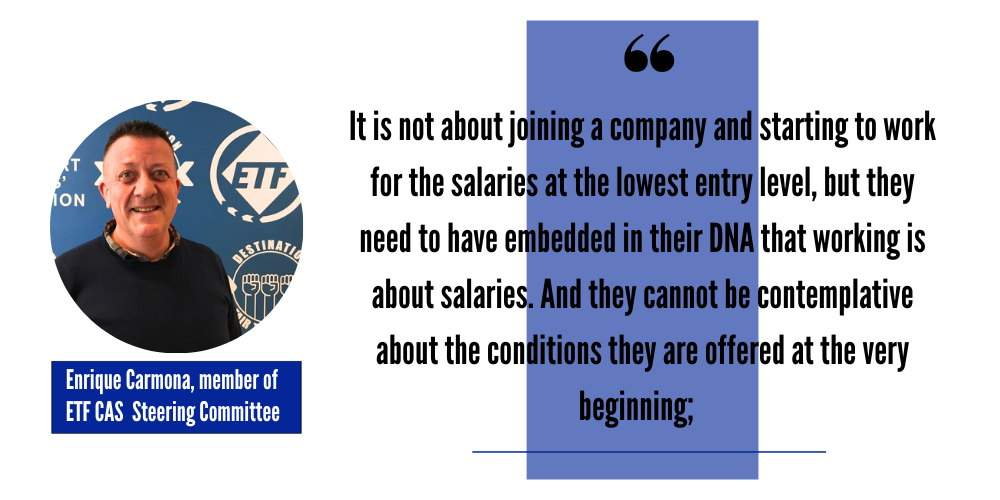
Enrique Carmona, member of the ETF CAS Committee and representing the Spanish union CCOO, is convinced that the first reason should derive precisely from the enormous negative impact social dumping – the illness of our times, as he calls it – has on youth:
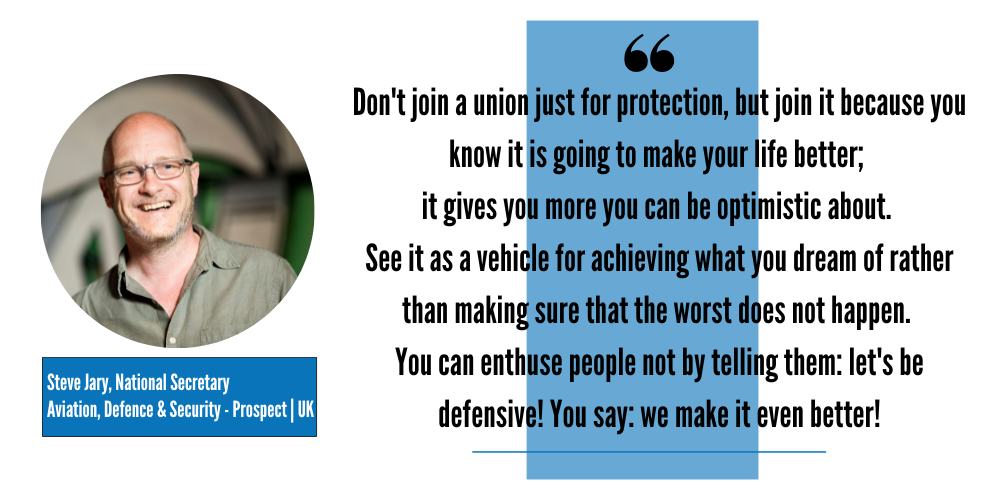
Steve Jary, National Secretary of Aviation, Defence & Security at Prospect, joined the trade union world in his early 20. And for almost 30 years, he represented workers’ interests and has seen it all: form negotiations which were merely a formality to stubborn employers bent in the end, even if a strike was needed to demonstrate the power of a union. No matter the age, he says, people turn to unions to be helped. Looking to the future, he added: