

Summer 2026 saw Europe battered by a series of unprecedented heat waves, with temperatures soaring above 40 degrees multiple times across many cities. Trade unions across Europe raised the alarm over working during extreme heat, especially in at-risk sectors like transport.
Bus drivers are particularly at risk, as glass windows in bus cabins trap heat, creating a greenhouse effect and making the cab even hotter than outside. Buses often do not have air conditioning or, where they do, poor maintenance means that the AC systems do not work effectively. Despite this, drivers often fear being disciplined or losing pay if they refuse to work in unsafe conditions.
Extreme heat adds to the existing problem of a lack of toilet facilities, which has been afflicting the public transport sector for many years. Despite access to toilets being a basic human right, employers are not required by law to provide toilets along bus routes, as the bus is not considered legally to be the place of work of the drivers. Drivers are forced to urinate in bottles, by the side of road or simply limit their intake of fluids during their work. Driving dehydrated is already extremely dangerous, similar to driving drunk, but the risk is exponentially worse during extreme heat with inadequate cooling systems.
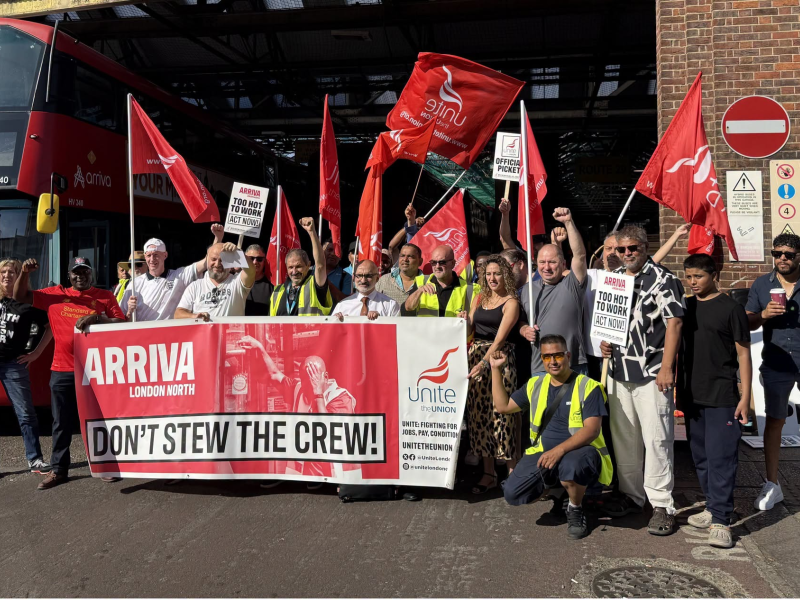
London was particularly hit by extreme heat, with the Met Office, the UK’s national weather service, issuing a rare red weather warning during the summer, indicating that the heat represented a risk to life for everyone. The city experienced a record-breaking 40 days where the weather exceeded 30 degrees. London bus drivers faced scorching temperatures, exacerbated by a lack of facilities, air conditioning, and employers that were unwilling to act meaningfully on the issue. Temperatures inside bus cabs rose to 50 degrees in some situations. Due to this unacceptable situation, ETF affiliate Unite the Union demanded and achieved the setting up of an extreme weather taskforce, made up of Transport for London (TfL), the Greater London Authority, London bus operators, and the union itself.
Thanks to Unite’s campaigning all summer and its work on the extreme weather taskforce, Transport for London and the bus operators committed in early September to fitting all bus driver cabs with air conditioning by May 2027. Cabs will also be fitted with UV protective film to reduce the risk of skin cancer for drivers. Another victory came later in the month, when the Mayor of London and TfL announced that they would build 53 extra toilet buildings across the city to ensure that all bus routes have facilities at the either terminus. These commitments, taken in close cooperation with Unite, will meaningfully improve the working conditions of London’ bus drivers, who keep the city moving every day.
Unite’s successes for its members were capped off on the 25th September, when the Mayor of London announced that, after consultations with Unite, TfL would launch a publicly owned bus operator in late 2027. Currently, London buses are tendered to private operators, who extract a profit from each contract. The for-profit nature of these operators has placed a downward pressure on workers’ pay and conditions, including on topics like extreme heat and toilet facilities. A public operator, running services in the public interest and not for profit, represents as an important opportunity to improve transport services for the public and working conditions for workers.
ETF congratulates Unite for its successes in securing victories for its members. The message from London is clear – cities and public transport authorities must work together with unions to deal with problems like heat, facilities, and the race-to-the-bottom businesses models.
Photo Credits: Unite the Union