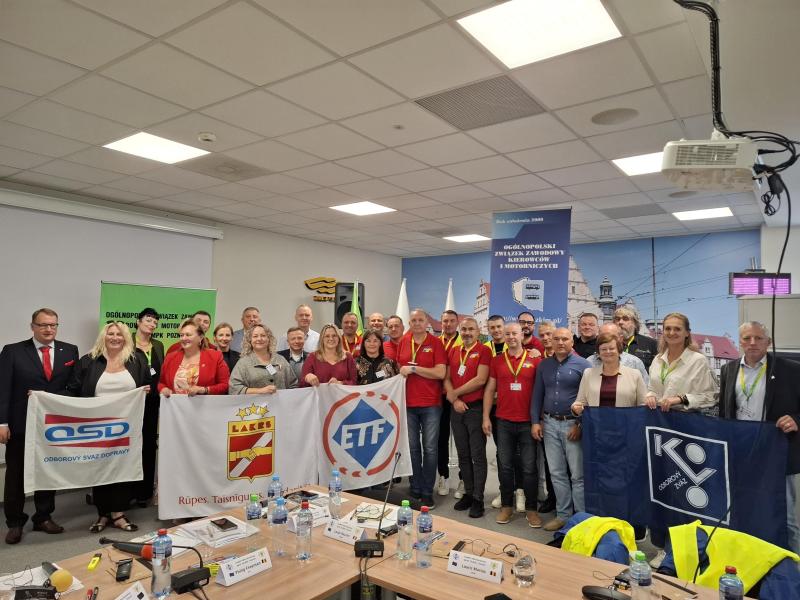
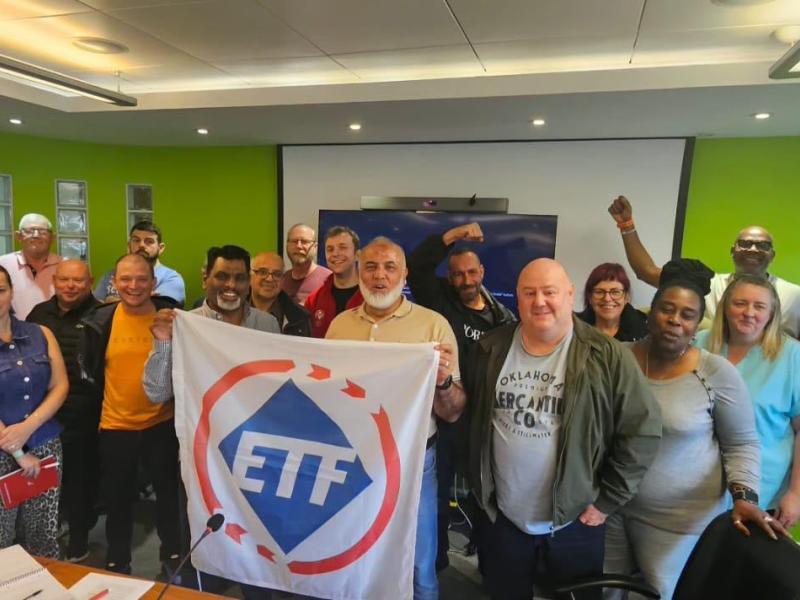
Road transport unions from across Europe gathered in Liverpool this week for an ETF conference hosted by our affiliate Unite the Union, placing the spotlight on one of the sector's most pressing challenges: subcontracting.
Trade union representatives came together to exchange experiences and discuss how workers can be better protected from increasingly complex subcontracting chains that are reshaping the road transport industry across Europe.
Unite the Union welcomed participants to Liverpool, underlining the city's proud history of internationalism and workers' power. Unite stressed that subcontracting is not about flexibility, but a deliberate strategy to fragment workforces, weaken accountability and make exploitation look like efficiency.
These concerns were echoed throughout the conference. Presentations highlighted how subcontracting has evolved from a business practice into a structural feature of the transport sector, with long and often opaque chains making it increasingly difficult to identify responsibility when workers' rights are violated.
The Road Transport Due Diligence (RTDD) foundation presented its work mapping subcontracting models across Europe and identifying the risks associated with complex supply chains. While many companies comply with existing legislation, transparency remains a major concern. Participants agreed that companies should always know who is ultimately transporting their goods, yet this is frequently not the case in practice. The consequences can include labour exploitation, social dumping, unfair competition, money leaking out of the value chain, and increased risks to cargo safety and security.
The discussion also looked beyond Europe. The ITF Director of Land Transport outlined how labour recruitment patterns are changing globally, with drivers increasingly being recruited from countries far removed from where they eventually work. This trend is creating new challenges for enforcement authorities and trade unions alike, raising important questions about how workers can organise and exercise their rights across borders. Stronger cooperation between trade unions, labour inspectorates, the European Labour Authority (ELA) and other organisations will be essential to address these challenges.
National experiences reveal common challenges
Despite national differences, the experiences shared by unions revealed striking similarities across Europe. In the UK, Unite highlighted how subcontracting has become the dominant model across large parts of the logistics sector, contributing to fragmented supply chains, weaker collective bargaining and growing precarity. The ongoing UPS dispute was presented as a clear example of how an entire operation can be outsourced, shifting risks onto workers while undermining established employment relationships.
Belgian unions shared their experience in the rapidly growing parcel delivery sector, where investigations uncovered widespread social fraud and exploitation linked to subcontracting chains. Trade union pressure, combined with labour inspections and public scrutiny, has already delivered concrete results, including the direct employment of workers who had previously been operating through subcontracting arrangements.
The Danish union highlighted how trade unions can shape subcontracting through collective bargaining. By ensuring subcontractors are covered by the same collective agreements and labour standards as the main contractor, the Danish model has helped strengthen working conditions and limit unfair competition in the sector. However, significant challenges remain, particularly in international transport and in the rapidly growing segments of light vehicles, minivans and last-mile delivery.
Our French delegation explained that France already has a relatively well-developed legal framework governing subcontracting in road transport. Transport companies can subcontract part of their activities, but they remain responsible for carrying out due diligence checks and ensuring that subcontractors comply with legal and administrative requirements. Yet, the existence of rules alone is not enough during cross-border transport operations.
Examples from Italy and Spain demonstrated how collective bargaining and robust legislation can play a key role in protecting workers throughout subcontracting chains. Both countries have developed mechanisms aimed at ensuring subcontracted workers benefit from the same protections and working conditions as directly employed workers, helping to prevent social dumping and unfair competition.
Stronger enforcement and fair supply chains
The event also welcomed contributions from the European Commission, the European Labour Authority (ELA), UETR and Fair Mobility. Discussions highlighted the importance of stronger enforcement of existing rules, better access to information and enhanced cooperation between national authorities.
One message emerged clearly from the discussions: workers must not pay the price for long, complex and non-transparent subcontracting chains. Companies at the top of the supply chain must be held accountable, and responsibility for working conditions must be clear at every level.
ETF will continue to fight for stronger regulation at both European and national level by limiting excessive subcontracting chains, increasing transparency and accountability throughout the supply chain, regulating intermediaries and strengthening the enforcement of existing rules. As discussions continue around the upcoming Quality Jobs Act and the Fair Labour Mobility Package, trade unions remain united in demanding a road transport sector built on fair competition, decent work and responsible contracting.
Read more here: